
Live Longer and Healthier by Walking More
A recent study adds to the existing evidence that brisk walking benefits your health. The study (Circulation, Nov. 6, 2017) measured physical activity levels in 16,741 women, average age 72. The kind of moderate-to-vigorous intensity physical activity derived through brisk walking was associated with a 60 to 70 percent lower risk of death at the end of the four-year study among the most active women (those who walked for an average of about 70 minutes per day) compared with the least active (those who walked for an average of about eight minutes per day).
The benefit seen is significantly greater than the 20 to 30 percent reduction suggested by previous studies, likely because most other studies have relied on self-reported physical activity, which tends to be imprecise. Conversely this study used a highly sensitive accelerometer device that accurately tracks motion and velocity, along with low-intensity activities and sedentary behavior.
The data only show an association, but the researchers contend that the link is probably causal. Light physical activity, such as slow walking, was not associated with a lower death rate. Keep in mind that this doesn’t mean slow walking isn’t good for you—it may be beneficial for other health outcomes that were not evaluated in this study.
How Walking Helps Your Health Regular, brisk walking improves your circulation and helps your heart and lungs work more efficiently—it also burns calories that might otherwise contribute to a weight problem. A person weighing about 150 pounds can burn about 240 calories per hour if they sustain a pace of about two miles per hour. Alongside these benefits to your physical health, walking also boosts energy and can ease stress and tension—and if you walk with a relative or friend, or join a local walking group (find one via your local senior center), it can be a good way to keep up the social interaction that may help preserve cognitive wellbeing.
Comfortable Walking Although the speed at which you walk isn’t as important as setting and keeping to regular (preferably daily) walking sessions, you should try to aim for a steady pace that is brisk enough to increase your heart rate. “Think in terms of the ‘talk test’,” says David Thomas, MD, professor of medicine and rehabilitation medicine at the Icahn School of Medicine at Mount Sinai. “If you are able to keep up a conversation with a walking partner without much effort, then you aren’t walking fast enough—but if you’re too breathless to talk at all, you may be going too fast.”
Wear the proper shoes—cushioned walking or running shoes with a slightly elevated heel and arch supports are preferable (we’ll be looking at walking shoes in an upcoming issue). “Wear loose, comfortable clothing, and opt for several light layers in chilly weather, as opposed to one or two heavy layers,” Dr. Thomas advises. “If it is particularly cold, wear a hat or cap.”
Stay Hydrated Be sure to drink liquids when you are engaged in any activity that makes you sweat, even if you don’t feel thirsty—keep in mind that you may not be as aware of thirst as you age, and by the time you notice it, you probably are already low on fluids.
Staying Safe and Injury-Free Walk during the day, and wear reflective clothing if the weather is foggy. Avoid uneven and/or rocky ground if you have balance issues, and if you’re using the sidewalk, stay alert for broken paving that could trip you (on rural or off-road hiking paths, watch out for tree roots). Also be aware of other pedestrians, cyclists, and dogs that may frequent walking trails. If you’re roadwalking, face oncoming traffic.
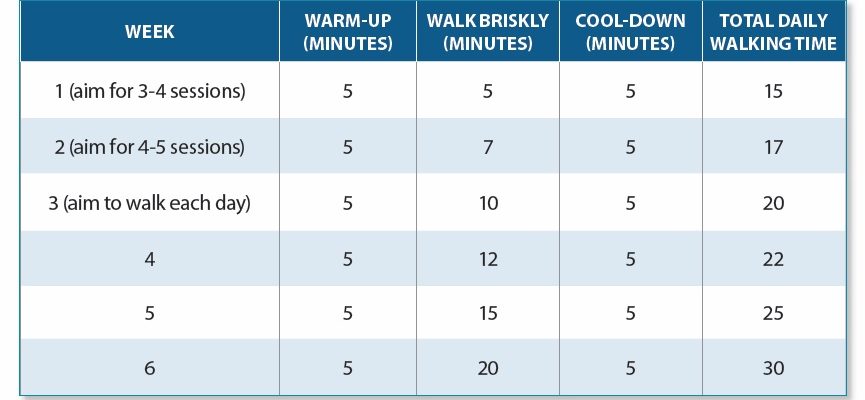
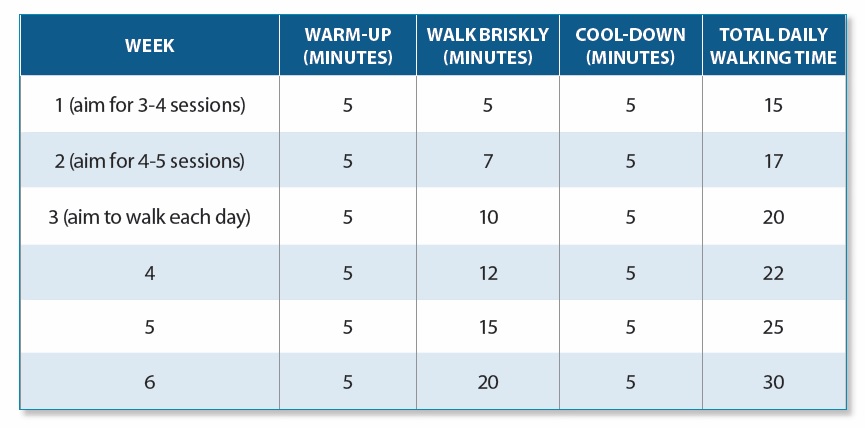
“If you suffer from any health issues, take the precaution of checking with your doctor or physical therapist, who can assess your levels of strength, flexibility, and pain, before beginning a walking program,” says Dr. Thomas. He adds that you shouldn’t be surprised to suffer some mild muscle soreness both after walking and initially when you start a walking session, particularly if you’ve led a fairly sedentary lifestyle. “Start gradually and progress slowly,” he says (see our chart for a schedule). “Once you become accustomed to the exercise, these effects should ease, but if you continue to experience them, mention the issue to your doctor.”
The post Live Longer and Healthier by Walking More appeared first on University Health News.
Read Original Article: Live Longer and Healthier by Walking More »
