
Eat More White, Less Red (Meat, That Is)
Meat, especially red meat, has been singled out as an unhealthy aspect of the American diet. Some experts say that our carnivorous cravings are increasing our risk for cardiovascular disease, diabetes and some types of cancer. But not all meats are created equal. Here’s a look at how to make healthy meat decisions.
Red Meat
Red meat (beef, pork, lamb, veal) is the most studied of the meats we put on our plates. An analysis of NIH-AARP Diet and Health Study published in The British Medical Journal found that risks of several diseases were associated with increased consumption of red meat. That held true for both processed (i.e., ham, bacon, sausage) and unprocessed meat. The World Health Organization says that the risk of colorectal cancer could increase by 17 percent for every 3 ½ ounces of red meat eaten daily.
Kale and Tuna Salad
1 bunch kale, chopped
1⁄8 c balsamic vinegar
1⁄4 c extra virgin olive oil
Pinch salt and ground pepper
2 oz cherry tomatoes, halved
2 5-oz cans tuna, drained
1 lemon
- Massage kale with balsamic vinegar, oil, and salt and pepper in a salad bowl.
- Add tomatoes and tuna and toss together.
- Squeeze lemon over salad and serve.
Makes 4 servings
Nutrition Information Per Serving: 273 calories, 22 grams (g) fat, 12 g carbohydrate, 25 g protein, 3 g dietary fiber, 333 milligrams sodium.
Recipe adapted courtesy of Seafood Nutrition Partnership
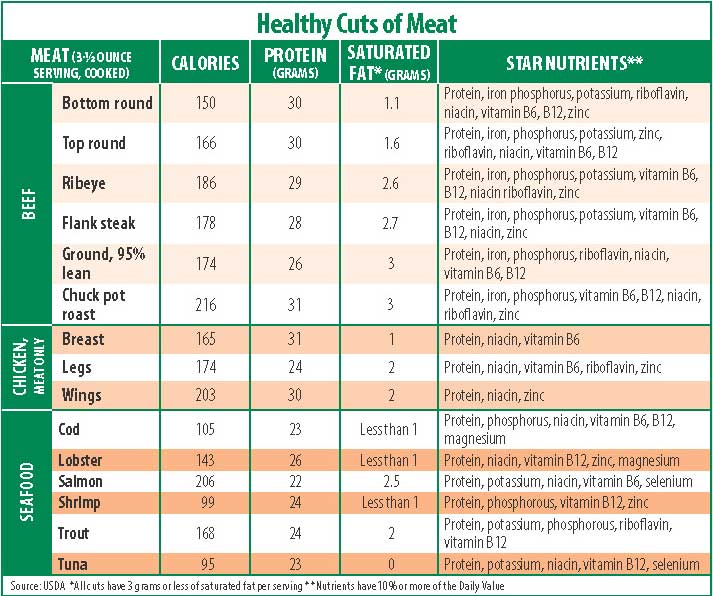
But not all studies have found red meat to be a problem. An analysis published in the Journal of Internal Medicine revealed that some studies found no risk associated with consuming 3 ½ ounces of unprocessed red meat a day. In a Swedish population, only processed meat was associated with heart disease. Others have found that including one to five ounces a day of lean red meat (mostly select grade top round, chuck shoulder pot roast, and 95% lean ground beef) in the diet is actually linked with a decrease in cardiovascular disease risk factors—LDL cholesterol and total cholesterol.
Poultry, Fish and Seafood
The AARP study found that eating unprocessed white meat (poultry and fish) was associated with reduced risk of disease. Analysis of men and women in the Health Professionals Follow-up Study and the Nurses’ Health Study found that substituting one serving a day of fish, poultry, nuts, legumes, low-fat dairy, or whole grains for one serving of red meat was associated with a 7–19 percent lower risk of death during the study.
Putting it into Practice
According to Frank Hu, MD, PhD, professor of medicine at Harvard Medical School, most published studies have shown a significant association between red meat consumption and risk of chronic disease. “For unprocessed meat,” he says, “it is desirable to consume no more than two ounces per day.”
Arash Etemadi, MD, PhD, Research Fellow, Division of Cancer Epidemiology and Genetics, National Cancer Institute, and co-author of the British Medical Journal study, points to recommendations from the World Cancer Research Fund, which recommends limiting consumption of red meat to less than 18 ounces a week. The American Heart Association recommends eating at least two servings of fish a week.
Still, not all studies that have found a link are able to identify the types of red meat (beef, lamb, pork) eaten, the specific cuts of meat, how meat or fish was prepared (fried or grilled vs. baked), or the ethnic diversity of the population studied. Until researchers can develop a meat-eating prescription for good health, it’s best to follow current advice to stick to moderate amounts of lean red meats, and put more fish and poultry on your plate.
—Densie Webb, PhD, RD
The post Eat More White, Less Red (Meat, That Is) appeared first on University Health News.
Read Original Article: Eat More White, Less Red (Meat, That Is) »
Powered by WPeMatico
