
6. Shape Up Your Plate
What You Eat and When
Choosing what to eat is an important part of your day. The choices you make day in and day out comprise your eating pattern, and studies show that eating patterns can have a significant impact on health. If you’re accustomed to eating most of your meals away from home, this chapter will give you simple meal ideas you can make in your own kitchen. If you’re already used to eating most of your meals at home but are bored by the same old meals, this chapter will help re-ignite your culinary creativity.
This chapter presents food as traditional breakfast, lunch, dinner, and snacks, but your own meal timing may differ from this. How often you should eat is partly a matter of personal preference and what kind of work or activity schedule you keep. Some people prefer three regular meals a day, whereas others prefer to eat five or six smaller meals a day. Research hasn’t clearly shown that one way is necessarily better than the other, but realize that the more often you eat, the less you should eat at a time. Conversely, avoid eating less than three times a day, as that could make it tougher to control your appetite.
If you’re eating three meals a day and find that you’re often overly hungry at the evening meal, add a mid-afternoon snack to help keep hunger in check. Depending on what time you eat breakfast and lunch, you may or may not need a morning snack. Although many people do report eating an evening snack, check in with yourself first to determine if you’re truly hungry or just eating mindlessly, perhaps triggered by food commercials on television or the habits of others in your household. On the other hand, if you won’t be able to eat much prior to an early-morning athletic event, eating a nutritious bedtime snack the night before can be a smart move.
Breakfast Time
Just like a car, your body doesn’t run well—physically or mentally—when you’re low on fuel. If you feel fatigued during exercise, there are two likely reasons: 1) your liver doesn’t have enough glucose stores (called glycogen) to keep your blood sugar up and fuel your brain, so you mentally “bonk out” and feel you must stop, and 2) your muscles don’t have enough glycogen stores to fuel physical movement. If your legs have ever felt exhausted or like lead during exercise, it’s likely because they’ve run out of glycogen. Your muscles keep glucose stores to themselves—they don’t share it with the rest of the body—so, your blood sugar can still fall, even if your muscles have glycogen. Eating breakfast may help prevent or minimize both types of fatigue during exercise.
Breakfast and Performance
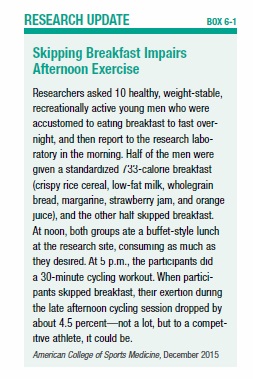
Your body can store only a limited amount of glycogen in your liver and muscles. The glycogen stored in your liver decreases by about 40 percent after an overnight fast. Research shows that eating breakfast improves exercise performance in the morning, compared to skipping breakfast. Eating a carbohydrate-rich breakfast can help top off glycogen stores in your liver, which later can be released by your liver to help keep blood sugar levels from dipping during exercise, and also may help replenish muscle glycogen stores used to fuel activity. New research also suggests that eating breakfast might be important for optimizing your exercise performance throughout the day (see Box 6-1, “Skipping Breakfast Impairs Afternoon Exercise,” on page 58).
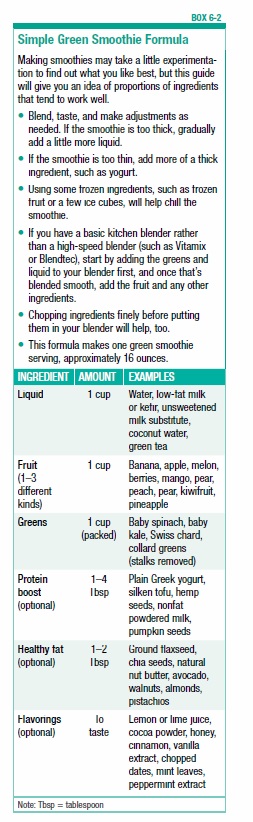
Some people say they aren’t hungry for breakfast. Interestingly, preliminary research on circadian rhythms (daily 24-hour cycles of the body) suggests nausea tends to peak around 6 a.m., so if you’re an early morning riser, this may factor into why you don’t feel hungry when you wake up. Realize that breakfast doesn’t have to be eaten immediately after you get up though. You can wait an hour or two if that works better. Breakfast doesn’t have to be a formal, cooked meal either—it can be just a bowl of cereal, or yogurt, or peanut butter spread on whole grain bread and topped with banana slices. If you don’t like traditional breakfast foods, there’s no reason you can’t eat yesterday’s dinner leftovers for breakfast or have a smoothies (see Box 6-2, “Simple Green Smoothie Formula”). Many cultures are accustomed to eating vegetables for breakfast.
Early-Morning Exercise
Depending on how soon you’re exercising after breakfast, you may need to adjust the size of your meal to avoid discomfort during exercise. For example, if you’re going to exercise an hour after breakfast, you might simply eat some cubed cantaloupe or a mini whole-wheat bagel with jam. The idea is to choose light foods that are healthy and easily digested such as fruit and whole grains, rather than foods high in protein and fat, which take longer to digest. Additionally, before exercise, skip foods that are high in fiber (5 grams or more fiber per serving, or 20 percent or more of the daily value for fiber per serving), such as bran cereal, which could trigger the need for a bathroom break in the middle of exercise.
If you are an early morning exerciser and really don’t care to eat beforehand, it’s generally fine to exercise on an empty stomach, if you feel energetic enough without eating. Forgoing eating before early morning exercise will alleviate the risk of gut distress during exercise, and your body tends to adapt to exercise without breakfast over time, too. Further discussion on adjusting what you eat at meals prior to exercise can be found in Box 3-7, “Eating Before Events,” on page 34. If you aren’t planning to exercise shortly after breakfast, you can enjoy a well-rounded breakfast, such as those shown in “Appendix II: Balanced Plate Ideas,” on page 91.
Better Breakfast Bowls
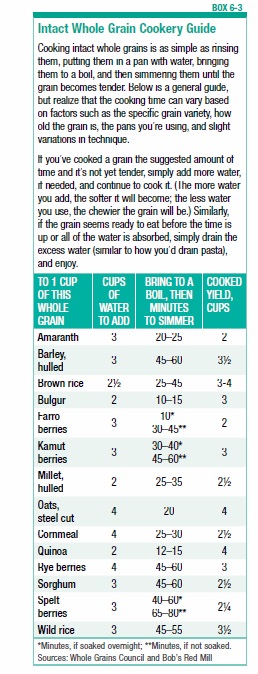
Cooked whole grains with fruit and nutty toppings are a hearty way to begin the day. Start by cooking intact grains (those not ground into flour) per the guidelines in Box 6-3, “Intact Whole Grain Cookery Guide.” Add low-fat milk or your milk substitute of choice and stir in your favorite toppings. Here are some flavor combinations to get you started, but the options are endless. Dried fruit is easy to keep on hand and will soften if added to the grain during cooking.
- Honey apple nut: Amaranth, chopped apple, honey, walnuts
- Raisin pistachio: Barley, raisins, pistachios
- Blueberry vanilla: Brown rice, blueberries, honey, vanilla extract
- Hazelnut apricot: Bulgur, chopped, dried apricots, roasted hazelnuts. (Tip: To roast nuts, spread them on a baking sheet and heat in a 350ºF oven for 5 to 10 minutes or until golden brown and fragrant. Keep a close eye on them; they can burn quickly.)
- Mango coconut: Farro berries, dried mango, unsweetened coconut flakes, cashews
- Pomegranate walnut: Kamut berries, pomegranate arils (seeds), walnuts, honey, cinnamon, cardamom
- Nutty date: Millet, chopped dates, peanuts
- Almond raisin: Whole-grain polenta, almonds, raisins, cinnamon
- Nutmeg peach: Steel-cut oats, freeze-dried peaches, slivered almonds, nutmeg
- Cranberry pecan: Quinoa, dried cranberries, chopped apple, pecans
- Apple raisin: Rye berries, chopped apple, raisins, sunflower seeds
- Raisin coconut: Sorghum, raisins, unsweetened coconut flakes
- Strawberry banana: Spelt berries, strawberries, banana, pistachios
- Cherry nut: Wild rice, dried cherries, pine nuts
Lunch and Dinner Ideas
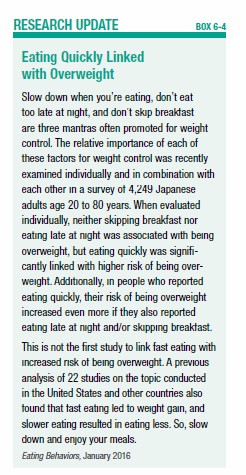
As introduced in Chapter 2 and discussed further in Chapter 5, you can plan a simple meal by following the model depicted in Tufts MyPlate for Older Adults. For ideas of what to put on your plate, check the many lunch or dinner meals in “Appendix II: Balanced Plate Ideas,” on page 91. In addition to what you put on your plate, take time to enjoy what you’re eating: pay attention to the aroma, flavor, and texture of each bite. Not surprisingly, slowing down to enjoy your food may even help with weight control (see Box 6-4, “Eating Quickly Linked with Overweight”).
Salad Meals
Salad meals are colorful, nutritious, and also easy to make. Include leafy greens, vegetables and fruits, and protein in your salads to ensure your salads are satisfying and chock-full of nutrition. If you need to round out the meal, add whole-grain crackers or warmed whole-wheat pita bread wedges.
Start with Leafy Greens
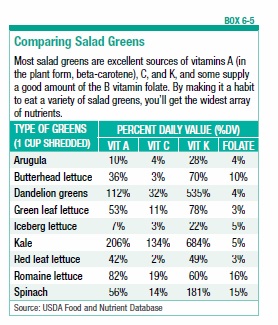
Although you may have grown up eating iceberg lettuce, darker greens are really more nutritious (see Box 6-5, “Comparing Salad Greens”). Consider any of these next time you make a salad:
- Baby arugula
- Butterhead lettuce
- Dandelion greens
- Kale (sprinkle with lemon juice and massage with your hands to soften)
- Red- or green-leaf lettuce
- Romaine lettuce
- Spinach
- Spring mixes (often contain arugula, frisée, oakleaf, radicchio, and other greens)
Boost Nutrition with Fruits and Vegetables
Although greens are the base of leafy salads, don’t stop there. You can layer all kinds of nutrient-rich vegetables and fruits on top of the greens to add interesting texture and flavor. Try some of these fruit and vegetable combos.
- Baby beets, blackberries
- Celery, diced apple, grapes
- Chopped artichoke hearts (canned, rinsed), sundried tomatoes
- Baby corn, blueberries
- Broccoli florets, mandarin orange segments, raisins
- Grated carrots, dried cranberries
- Cauliflower florets, chopped apple, raisins
- Chopped fennel bulb, pear slices, chopped dried figs
- Cucumber slices, white (green) grapes, cubed cantaloupe
Don’t Forget Protein
If you’ve ever eaten a salad for lunch and felt it didn’t have much staying power, it may have been low in protein. Include at least one good protein source on your salad, such as:
- Legumes: garbanzo beans (chickpeas), black beans, peas, or shelled edamame (green soybeans)
- Lean meats: leftover grilled sirloin steak strips, diced chicken breast, or Mexican-seasoned lean ground beef
- Seafood: canned or leftover, such as salmon, tuna, or shrimp
- Tofu, extra-firm
- Tempeh
- Boiled eggs, chopped
- Cheese: shredded reduced-fat cheese, part-skim mozzarella cheese, or low-fat cottage cheese
Smarter Salad Dressing
Supermarkets carry all kinds of salad dressing, but it’s simple to make, and if you make it from scratch, you can control the quality of the ingredients used. For example, you can use more healthful oils, such as extra virgin olive oil, make it with less or no salt, and avoid chemical additives and preservatives. Alternately, you could use a splash of balsamic vinegar or fresh lemon juice on your salad instead of using an oil-based dressing. See Box 6-6, “Simple Salad Dressings,” for flavorful ideas for making homemade dressing.
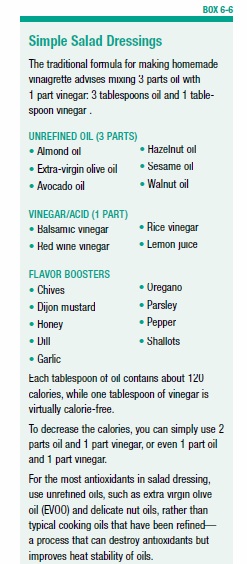
A bit of fat helps boost absorption of fat-soluble nutrients in salad, such as vitamins E and K, and antioxidant carotenoids such as beta-carotene and lycopene. Even so, you don’t have to slather your salad with oily dressing. As little as 3 grams of fat (that’s less than 1 teaspoon of oil) from a dressing made with an oil high in monounsaturated fat, such as extra virgin olive oil, may be all you need to get significant nutrient absorption. But what if you decide to simply spritz your salad with lemon juice instead of using salad dressing? Other fat-containing ingredients in salads, such as eggs, sliced avocado, nuts, and seeds, can increase fat-soluble nutrient absorption in your gut, too. So, you don’t necessarily have to include an oil-containing dressing on your salad.
Easy Stir-Fry Meal Formula
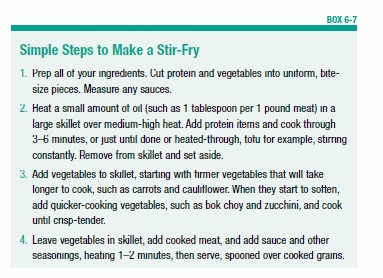
A stir-fry is a simple way to make a quick, nutritious, satisfying meal (see Box 6-7, “Simple Steps to Make a Stir-Fry”). It involves cooking uniform, bite-size pieces of meat and vegetables quickly in a little hot oil over medium-high heat on the stove. You don’t need a wok; a large skillet will work fine. For flavor, you can add herbs, spices, citrus juice, and/or a stir-fry sauce. If you use a bottled sauce, look for reduced-sodium versions. If a sauce needs thickening, add cornstarch to the sauce prior to cooking. Once your stir-fry is cooked, serve it over hot whole grains, which you can keep on hand precooked in your refrigerator or freezer. Stir-fries fit the MyPlate guide nicely—you’ll just eat the components mixed together rather than in separate sections of your plate. See Box 6-8, “Stir-Fry Idea Starter,” for some examples of what you can include in a stir-fry to provide a balanced meal.
Snack Ideas
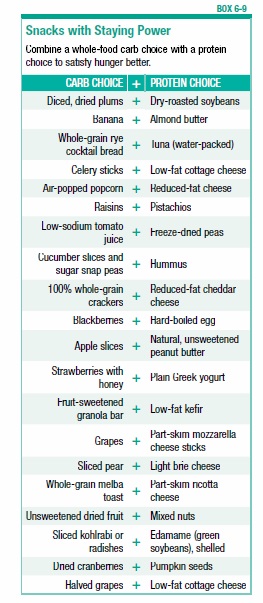
A snack can be as simple as a piece of fruit or handful of dry-roasted nuts to tide you over in between meals. If you’re looking for snacks with a little more staying power, try 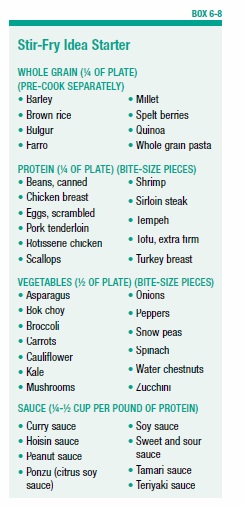 combining a whole-food carbohydrate item with a food that provides some protein. Several examples are provided in Box 6-9, “Snacks with Staying Power,” on page 64. These fruit and whole grain examples paired with protein also would work well if you exercise intensely at least daily and need a post-exercise snack that provides carbohydrate to restore glycogen in your muscles and that provides protein to help repair exercise-related muscle damage.
Smart Smoothies
Think of smoothies as kind of like a milkshake—but without ice cream and more nutritious. A smoothie is a simple way to blend healthy ingredients, such as greens, fruits, yogurt, and nuts, into a convenient hand-held beverage that you can drink for breakfast or as a snack. Smoothies can be especially handy when you don’t feel like eating a solid meal or when you’re on the go—you can blend it the night before and store it in your refrigerator. There is a caveat to be aware of when it comes to smoothies, however. Drinking is faster than chewing, so if you’re not careful about what you put in a smoothie and the portion size, you could take in a lot more calories than you intend. (On the other hand, if you’re struggling to take in enough calories, smoothies could be a great option.)
Following a simple formula for making smoothies (see ideas on page 59), you can concoct all kinds of healthy and tasty creations in your blender. If you develop a favorite smoothie and want to know how many calories are in it, run a nutrition analysis of it at a free recipe analysis website such as supertracker.usda.gov/myrecipe.aspx or nutritiondata.self.com/mynd/myrecipes. If you analyze a smoothie recipe that you’re eating as a snack and find it’s 500 calories, you’ll need to reduce the amount and/or type of ingredients to get it to a more reasonable snack-size serving, such as 200 calories. Certain ingredients, such as nuts, seeds, and fruit juice, will increase the calories quickly, so keep portions of them small, if you include them.
Recommended Recipe Sources
Recipes are available in so many places—books, magazines, newsletters, food company websites, blogs, government nutrition programs, cooking shows, grocery store handouts, health associations, commodity board websites, cooking supply stores, and more. If you’d like to expand your recipe collection, see “Appendix VI: Books and Online Resources,” on page 96, for more online and cookbook sources.
Your Cookbook Collection
Some cookbooks are considered “classics” because they’re tried and true, comprehensive, and friendly to new cooks. Others are tailored to specific needs, such as heart-healthy or diabetes-friendly. Many of the recipes in classic cookbooks are inherently healthy because they focus on using whole foods, cooked from scratch, although they don’t necessarily specify that you use reduced-fat or low-sodium ingredients. If a recipe doesn’t specify “lean ground beef” or “reduced-sodium broth,” for example, don’t be afraid to substitute—most recipes will work fine with such changes.
If you want to try a cookbook before buying it, check your local library, or glance through it at a bookstore to see if the recipes suit your needs and palate.
The post 6. Shape Up Your Plate appeared first on University Health News.
Read Original Article: 6. Shape Up Your Plate »
Powered by WPeMatico
